 Admin
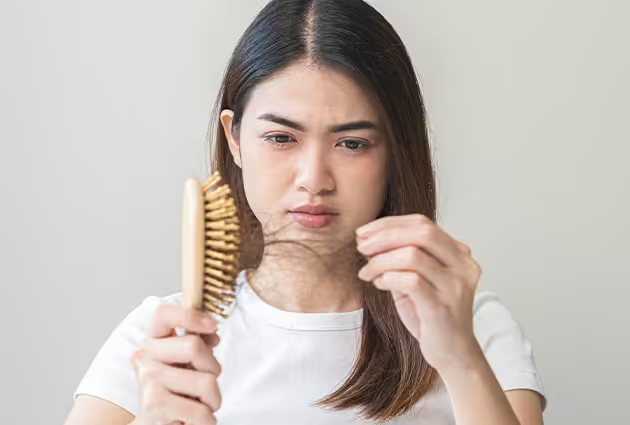
AdminFinding clumps of hair on your pillow or in the shower drain is unsettling, no matter how many times people tell you “it’s normal to lose 50-100 strands daily.” These hair fall control home remedies won’t work miracles overnight, but with consistency, they genuinely help.
Quick answer: Effective home remedies for hair fall control include regular oiling with coconut or castor oil, onion juice application, a protein-rich diet, and reducing heat styling — most show visible results after 8-12 weeks of consistent use.
Onion Juice — Smelly But Effective
I resisted trying this for years purely because of the smell, but onion juice contains sulfur, which supports hair follicle strength and has decent research backing its use for hair fall.
- Blend onion, strain the juice, apply directly to scalp
- Leave for 20-30 minutes, then wash thoroughly with a mild shampoo
- Use 2-3 times weekly for best results
Regular Oil Massages Matter More Than People Think
Coconut oil, castor oil, or a blend of both, massaged into the scalp weekly, improves blood circulation to hair follicles — a factor that genuinely influences hair growth and fall reduction.
Protein-Rich Diet From the Inside Out
Quick answer: Hair is primarily made of keratin, a protein, so a diet lacking sufficient protein, iron, and biotin directly contributes to increased hair fall — eggs, lentils, spinach, and nuts are practical, affordable sources for Indian diets.
Reducing Heat and Chemical Styling
Frequent straightening, blow-drying, and chemical treatments weaken hair shafts over time, making strands more prone to breakage that’s often mistaken for hair fall from the roots.
- Limit heat styling to 2-3 times weekly maximum
- Always use a heat protectant spray before styling
- Let hair air-dry partially before using a blow dryer
Fenugreek (Methi) Seeds for Scalp Health
Soaked overnight and ground into a paste, fenugreek seeds are a traditional Indian remedy with genuine nutrient content that supports scalp health when applied regularly.
Managing Stress-Related Hair Fall
Stress-induced hair fall (telogen effluvium) is increasingly common, and no amount of oiling fixes it if underlying stress isn’t addressed. This connection is often overlooked in typical hair care advice.
Avoiding Tight Hairstyles
Constant tight ponytails or braids cause traction alopecia over time — gradual hair loss at the hairline from repeated pulling tension. Loosening up styling choices occasionally genuinely helps.
When Home Remedies Aren’t Enough
If hair fall persists beyond 3-4 months despite consistent care, underlying issues like thyroid imbalances, PCOS, or vitamin deficiencies might be involved — worth checking with a doctor rather than continuing home remedies indefinitely. [link to related hair oiling routine guide here]
FAQ
How much hair fall is considered normal daily? 50-100 strands daily is generally considered within normal range.
Does onion juice really help with hair fall? Some research supports its sulfur content aiding hair strength, though results vary by individual.
Can stress really cause hair fall? Yes, significant stress can trigger a temporary hair loss condition called telogen effluvium.
How long before home remedies show results? Typically 8-12 weeks of consistent use before noticeable improvement.
Is oiling hair daily necessary? No, 2-3 times weekly is generally sufficient; daily oiling isn’t necessary for most hair types.
Should I see a doctor for hair fall? Yes, if hair fall persists beyond 3-4 months despite consistent care, professional evaluation is recommended.
Conclusion
Hair fall control through home remedies requires patience and consistency rather than expecting overnight transformation. Combine oiling, dietary changes, and gentler styling habits, and give it a genuine 8-12 week trial before deciding whether it’s working for you.